

Imagine a prospective client searching for your firm online and landing on a website that looks exactly like yours. The same logo, attorney bios, and practice descriptions, except it isn't your site at all.
That is the reality behind a recent discovery of more than 150 cloned law firm websites built with generative AI, each one designed to mirror the structure and tone of a legitimate practice.
Generative AI Drives Large Scale Domain Spoofing and Reputation Attacks
According to SecurityWeek's reporting on Sygnia's investigation, this wasn't a handful of opportunistic copycats. What began with one firm discovering impersonation quickly expanded into a coordinated network of more than 150 related domains. The infrastructure was deliberately built for durability and evasion: domains registered across multiple registrars and IP ranges, distinct SSL certificates for each site, and many deployed behind Cloudflare to obscure backend relationships and complicate takedowns. Each site was designed to appear independent, often posing as an asset recovery firm promising to help victims reclaim lost funds with no upfront payment required.
While the landing pages were polished and persuasive, investigators noted that many of the sites were structurally shallow. Beyond the homepage, content was thin, navigation sometimes non-functional or repetitive, and substantive attorney detail limited compared to legitimate law firm websites. The surface looked credible, but the depth didn't hold up under closer review.
What makes this development especially significant is how it happened. None of the firms were breached. There was no ransomware, no stolen credentials, and no compromised server. Instead, attackers relied on publicly available information and generative AI tools to manufacture trust at scale. They didn't need to penetrate internal systems because they weren't targeting infrastructure. They were targeting reputation.
For firms thinking seriously about AI governance and risk management, that distinction changes the conversation.
AI Risk for Law Firms Isn't Just Internal Anymore
But generative AI has expanded the threat landscape in a direction most firms haven't prepared for. Your cybersecurity controls can be strong, your Microsoft 365 environment properly configured, and your endpoints fully secured, and your brand can still be exploited from the outside.
AI now allows bad actors to recreate branding, rewrite attorney biographies, generate plausible legal content, and launch convincing websites quickly and cheaply. Traditional security controls were built to protect networks and data. They were never designed to prevent someone from manufacturing a parallel digital version of your firm.
For small and mid-sized law firms, especially those in the 20 to 100 employee range, reputation drives everything. Clients hire you because they trust you. They recognize your name. They rely on referrals and community credibility. When someone impersonates that identity online, the damage is relational rather than technical, which makes it significantly harder to unwind.
Generative AI has made credibility scalable, for legitimate firms and malicious actors alike. That reality should reshape how firms approach AI risk, not just inside their walls, but across their entire public presence.
Meanwhile, AI Is Already Embedded Inside the Firm
In most firms, that adoption didn't begin with a formal strategy. It started with convenience. Someone experimented with a tool to save time. A partner enabled Copilot to improve efficiency. Marketing used AI to tighten website copy. Each decision made sense on its own.
Over time, though, AI becomes embedded in the workflow without clear guardrails. Leadership may not have full visibility into which tools are in use, what data is being entered, or how AI-generated output is reviewed before reaching clients or a court filing.
That is where the external and internal risks begin to reinforce each other. A firm with weak internal AI governance is also less likely to have documented policies, defined roles, or a clear communication strategy when something goes wrong externally. The governance gap doesn't just affect what happens inside your systems. It affects how prepared you are to respond when your identity is the target.
Clients, insurers, and regulators are already asking more direct questions: How are you managing AI usage? How is client data protected? How do you supervise AI-generated work product? Firms that can't answer those questions clearly will find themselves reacting to pressure rather than leading with confidence.
A Practical Next Step: Understand Your Exposure
The discovery of 150 cloned law firm websites isn't just a cybersecurity headline. It's a signal that AI risk now extends beyond the firewall and into brand integrity and client trust.
You don't need to fear AI. But you do need to understand where you actually stand.
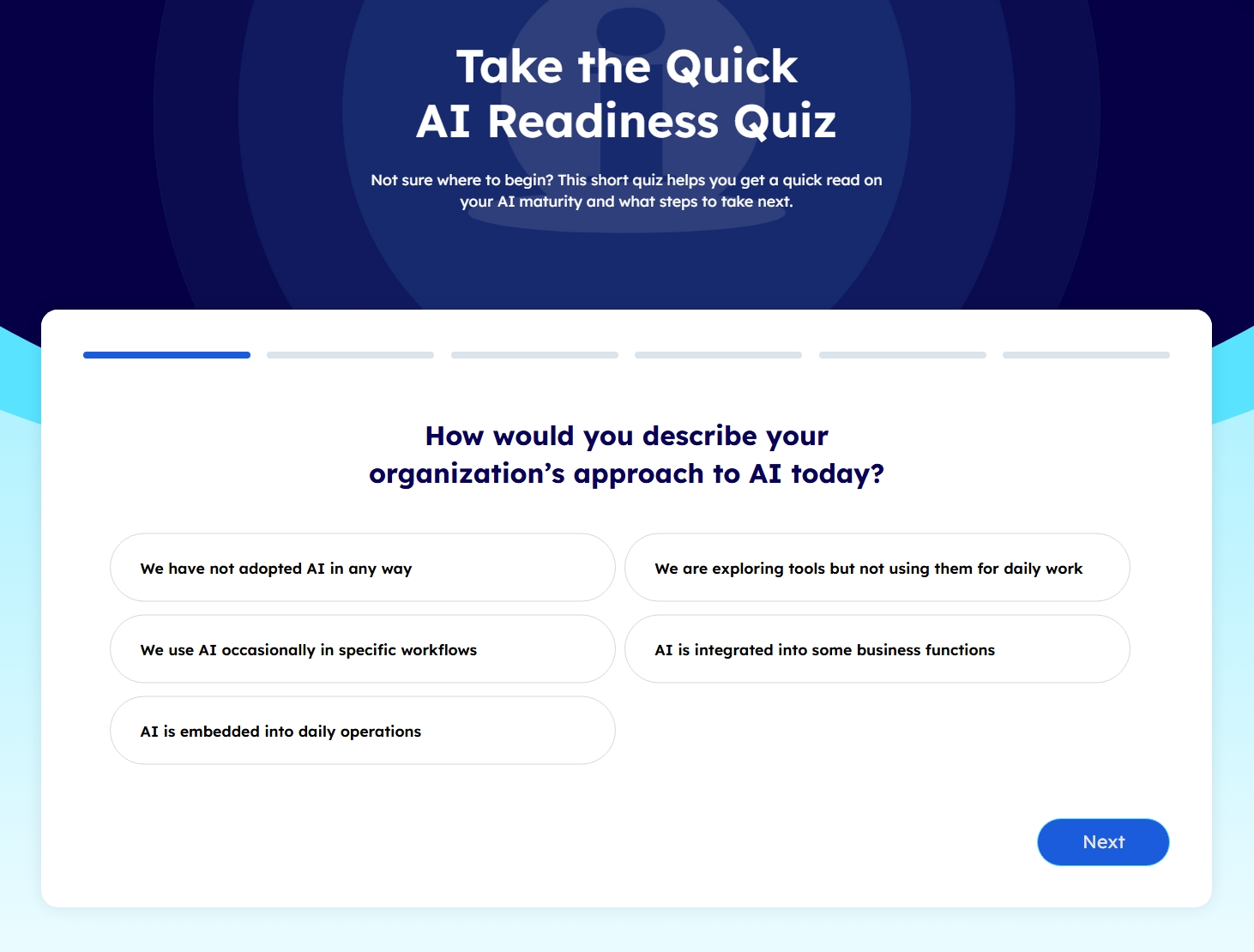
At iCorps, we work with law firms to conduct structured AI Readiness Assessments, a focused engagement designed to give leadership a clear, honest picture of their current posture. We look at how AI is being used across the firm today, identify gaps in policy, security configuration, and oversight, review how tools like Microsoft Copilot are deployed and governed, and provide a prioritized set of recommendations grounded in your firm's size, risk tolerance, and operational reality. The output isn't a report that sits on a shelf. It's a working document that tells you what to address, in what order, and why it matters.
Firms that approach AI deliberately, with documented governance, visibility into usage, and aligned security controls, are better positioned to innovate confidently and respond effectively when something unexpected happens. Firms that don't will eventually find themselves explaining an incident they could have anticipated.
In a landscape where your public identity can be replicated without anyone touching your internal systems, clarity about your AI posture isn't optional. It's the foundation everything else builds on.